


Table of Contents
- What Makes a Dump Trailer Suitable for Construction Debris
- Construction Dump Trailer Sizes and Bed Dimensions
- Dump Trailer Weight Capacity and Payload Ratings
- Key Features: Hydraulic Systems, Frame, and Floor Durability
- Dump Trailer Rental vs. Purchase for Construction Debris
- Dump Trailer Safety and Loading Tips for Job Sites
- Top Dump Trailer Brands and Models for Construction
- Ownership Costs and Maintenance Considerations
- Frequently Asked Questions
Last Updated: October 16, 2026
What Makes a Dump Trailer Suitable for Construction Debris
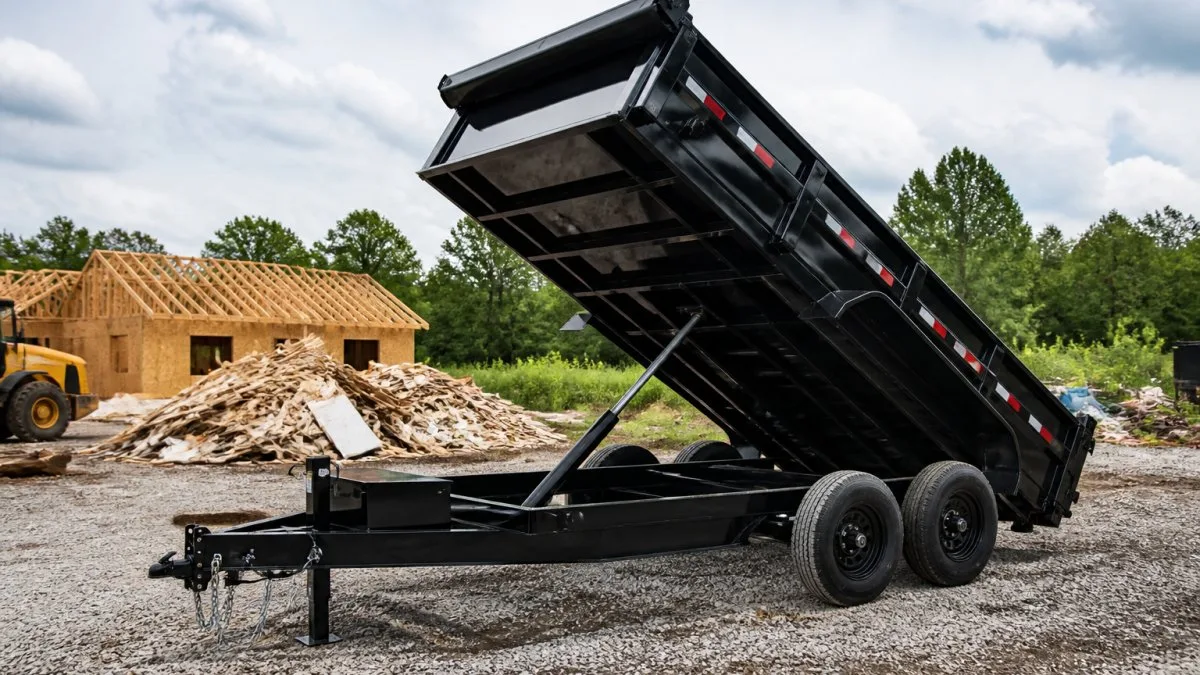
A dump trailer for construction debris is a heavy-duty hauler built to move bulk materials like concrete, asphalt, dirt, gravel, and mixed scrap. Unlike standard utility trailers, it uses a hydraulic lifting system that tilts the bed to unload automatically, critical for dense debris that would otherwise require manual labor.
The defining characteristic is a reinforced steel frame and floor built to withstand repeated impacts from sharp concrete chunks, rebar, and demolition waste. Most construction-grade models use a tandem axle configuration to distribute heavy payload weight safely.
Three factors separate a purpose-built construction dump trailer from a general-purpose one: structural reinforcement, payload capacity, and hydraulic reliability. Debris is unforgiving, sharp edges cut through weak flooring and weight shifts unevenly in transit.
When evaluating a dump trailer for construction debris, inspect the floor thickness first. Anything under 3/8-inch will show wear within a season of regular use on demolition sites. A thicker floor costs more upfront but pays for itself in longevity.
The hydraulic system handles repeated cycles, sometimes 20-30 dumps per day, without fatigue or leaks. Dual cylinders ensure even pressure distribution and prevent uneven tilting that can damage the frame or spill debris during unload.
Construction Dump Trailer Sizes and Bed Dimensions
Construction dump trailers come in standardized sizes suited to different hauling volumes and job-site constraints.
A 7x12-foot dump trailer holds roughly 3-4 cubic yards and weighs 4,000-5,000 pounds empty. It suits residential demolition, landscaping debris removal, and small commercial projects where maneuverability matters.
The 7x14-foot configuration offers a middle ground: 4-5 cubic yards and the most popular size for contractors balancing capacity with drivability.
For high-volume operations, an 8x16-foot dump trailer for construction debris delivers 6-7 cubic yards per load.
| Bed Size | Cubic Yards | Best For | Towing Ease |
|---|---|---|---|
| 7x12 | 3-4 | Residential, tight sites | Excellent |
| 7x14 | 4-5 | Mixed commercial/residential | Good |
| 8x16 | 6-7 | High-volume operations | Moderate |
Bed height matters too. Most construction dump trailers sit 24-30 inches high, balancing loading convenience with stability. Taller sides (36-42 inches) add volume but make loading larger debris pieces harder.
Dump Trailer Weight Capacity and Payload Ratings
Understanding payload capacity is non-negotiable for safe operation. Every dump trailer has a maximum payload rating (the weight of material it can carry) and a Gross Vehicle Weight Rating (GVWR), the total weight of the loaded trailer including frame, hydraulics, and axles.
Payload capacity typically ranges from 7,000 to 15,000 pounds depending on axle configuration and frame construction. Single-axle trailers max out around 7,000-9,000 pounds; tandem-axle configurations handle 12,000-15,000 pounds or more.
The critical calculation is matching material density to the payload limit. Concrete debris runs roughly 150 pounds per cubic yard, so a 7x14 trailer holding 5 cubic yards carries about 750 pounds of material, plus a 4,000-5,000-pound empty frame, totaling 4,750-5,750 pounds, well within tandem-axle limits.
Understanding GVWR and Axle Configuration
The GVWR is printed on the trailer's compliance plate and represents the maximum total weight it can legally carry on public roads. Exceeding it voids insurance coverage, increases braking distance, stresses the suspension, and creates liability in an accident.
A tandem-axle dump trailer for construction debris distributes weight across two sets of wheels, allowing higher payload capacity and better stability on uneven terrain. Single-axle trailers are lighter and cheaper but limit payload to lighter materials or smaller volumes.
Axle type also affects towing requirements. A high-payload tandem-axle trailer may need a heavy-duty truck rated for 15,000 pounds or more, while single-axle models can be towed by mid-size pickups.
Overloading a dump trailer voids manufacturer warranties, increases accident risk, and can result in fines if inspected by law enforcement. Always verify payload capacity before loading and weigh material if you're uncertain about volume-to-weight conversion.
Key Features: Hydraulic Systems, Frame, and Floor Durability
The hydraulic system is what makes a dump trailer actually dump.
Fluid capacity and pump size determine lift speed and how many cycles the system handles before overheating.
The frame is the skeleton. Most construction dump trailers use 6-inch C-channel or I-beam steel welded at stress points; budget trailers use lighter 5-inch channel that flexes and cracks sooner.
Floor durability separates trailers that last five years from those that last fifteen. A 3/8-inch steel floor is the minimum for construction debris; 1/2-inch resists puncture and abrasion better.
Side rails and corner bracing matter too. Debris catches on edges and rough handling creates impact stress, so reinforced corners and full-length side rails prevent twisting and keep the bed square under load.
Dump Trailer Rental vs. Purchase for Construction Debris
Rental makes sense for occasional hauling, a few jobs per year or a one-time demolition. Rates typically run $50-150 per day depending on size and location, with weekly discounts, and you avoid maintenance, storage, and insurance costs.
Purchase becomes the better choice when you haul debris weekly or more. A dump trailer for construction debris pays for itself within 1-2 years of regular use.
Ownership carries hidden costs: secure storage, commercial trailer insurance at $300-800 annually, and $200-500 per year for maintenance like hydraulic fluid changes, bearing lubrication, and brake inspection.
True North Trailers and Equipment offers flexible financing to spread payments over time. For contractors running regular jobs, ownership typically saves money versus repeated rentals, and your equipment is ready when an opportunity appears.
Dump Trailer Safety and Loading Tips for Job Sites
Safe operation of a dump trailer for construction debris starts before loading.
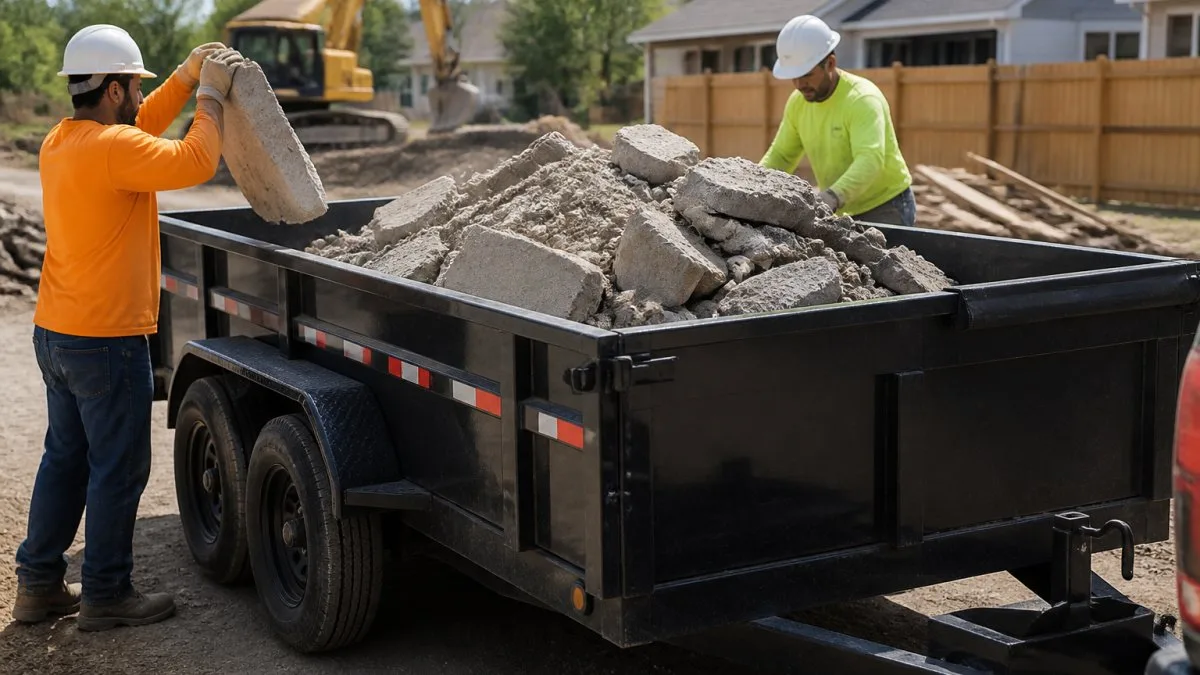
Loading technique matters more than most operators realize.
Secure loose material with tarps or netting on public roads, unsecured loads endanger following vehicles and violate local regulations. On job sites, park on level ground before unloading; tilting on a slope can damage the hydraulic cylinders or frame.
Load Distribution and Securing Debris
Proper load distribution prevents sway, reduces suspension wear, and improves fuel economy. Center weight side-to-side and concentrate it toward the front third of the bed; loading all weight at the rear lifts the tongue and reduces towing stability.
For mixed debris (concrete, wood, metal), separate by density: heavier items go in first and lower, lighter items stack on top. This prevents shifting in transit and makes unloading more efficient since denser material dumps first.
Tarping is required in many jurisdictions when debris can escape during transport. Use a heavy-duty tarp secured at all four corners; loose tarps flap and block following drivers' vision.
Legal Requirements and Disposal Rules
Operating a dump trailer for construction debris comes with regulatory obligations.
Before dumping, verify your destination accepts construction debris. Municipal landfills often restrict loads to clean demolition waste (concrete, asphalt, wood) and prohibit hazardous materials like lead paint, asbestos, or contaminated soil.
Hazardous waste requires special handling. Debris containing asbestos, lead paint, or chemical contamination can't go to standard facilities and may require a licensed hazmat disposal service at significantly higher cost. Always inspect debris before loading.
Documentation protects you legally: keep disposal receipts, log loads hauled, and photograph job sites before and after cleanup. This supports insurance claims and defends against liability if debris causes damage in transit.
Top Dump Trailer Brands and Models for Construction
Several manufacturers dominate the market, each with different strengths in capacity, durability, and price.
Load Trail DE8314 7x14: Budget-Friendly Work Trailer
The Load Trail DE8314 is a 7-by-14-foot dump trailer, an entry point for contractors new to ownership. It holds 4-5 cubic yards, sized for residential demolition and small commercial projects.
Load Trail positions this as a general work trailer: it handles mixed debris adequately but lacks premium-brand reinforcement, with standard channel steel and an adequate floor. For occasional loads or testing whether ownership makes financial sense, it delivers reasonable value.
The trade-off is durability under extreme conditions. Hauling dense material like concrete or wet clay, or running 20+ loads weekly, wears the DE8314 faster than a premium alternative, but for seasonal contractors or occasional debris removal, the lower price often justifies the choice.
Big Tex, PJ Trailers, and Diamond C: Established Options
Big Tex, PJ Trailers, and Diamond C are industry standards with decades of reputation. Big Tex spans multiple sizes and configurations with durable construction, common on job sites because dealers stock them widely and parts are reliable.
PJ Trailers focuses on tandem-axle configurations with higher payload capacity for contractors hauling dense materials regularly, typically with dual hydraulic cylinders and reinforced frames.
Diamond C emphasizes customization, bed dimensions, floor thickness, and hydraulic options, appealing to operators with specific requirements.
All three offer dealer financing, and we can connect you with options matching your budget and application.
MAXX-D, CAM, and Appalachian: Alternative Brands
MAXX-D, CAM, and Appalachian serve contractors seeking alternatives. MAXX-D emphasizes durability in harsh environments with reinforced frames and heavy-gauge steel; CAM offers competitive pricing and solid construction, popular with landscapers and smaller operations; Appalachian focuses on regional markets and custom builds.
These brands have smaller dealer networks and slower parts availability than Big Tex or PJ, but often undercut premium brands on price while maintaining reasonable quality. They're worth evaluating where their dealers operate.
Ownership Costs and Maintenance Considerations
The purchase price is just the beginning. Annual maintenance and repairs typically run 5-10% of purchase price.
Change hydraulic fluid annually or every 500 operating hours, whichever comes first.
Bearings and axles need periodic inspection and lubrication: repack wheel bearings every 1-2 years and inspect axle seals for leaks.
Inspect the frame for cracks, especially at weld points. Rust develops if the trailer sits unused outdoors, so a protective coat of paint every 3-5 years extends frame life significantly.
Storage matters: a trailer parked outdoors deteriorates faster than one kept in a garage or covered facility.
Tires are a hidden cost. Trailer tires wear faster than truck tires without power steering to distribute wear evenly, so plan on replacing them every 3-5 years depending on size.
Finding the right dump trailer for construction debris means matching capacity to your hauling volume, understanding weight ratings and legal requirements, and choosing a brand that balances durability with your budget. True North Trailers and Equipment offers a diverse inventory of dump trailers built to last, with competitive pricing and flexible financing to make ownership accessible.
Frequently Asked Questions
What size dump trailer is best for construction debris?
Size depends on your job scope and debris type. A 7x14-foot dump trailer handles general construction waste, gravel, and sand for most residential and small commercial projects. Larger 10x14 or 12x14 models suit high-volume demolition and landscaping work. Tandem-axle trailers carry more weight per trip, reducing the number of hauls needed. Choose based on your typical debris volume and available towing capacity.
How much weight can a dump trailer carry?
Payload capacity varies by model and axle configuration. Single-axle dump trailers typically handle 5,000 to 8,000 pounds, while tandem-axle models carry 10,000 to 16,000 pounds or more. Always check the trailer's GVWR (Gross Vehicle Weight Rating) and compare it to your truck's towing capacity. Concrete, asphalt, and dirt are heavy; distribute the load evenly across the bed to avoid exceeding limits and ensure safe hauling.
Is it better to rent or buy a dump trailer for construction debris?
Renting works for one-time or occasional projects. Buying makes sense if you haul debris regularly, as you avoid recurring rental costs and have equipment ready when needed. Consider ownership expenses: maintenance, storage, insurance, and registration. Small operations and contractors on tight budgets often rent, while established construction firms and landscapers typically own.
What should I look for in a dump trailer for construction debris?
Prioritize reinforced frame and steel floor thickness (typically 3/8 inch or thicker) to withstand sharp debris and heavy loads. Dual hydraulic cylinders provide smoother, more reliable unloading. Check that the trailer's GVWR matches your truck's towing capacity and your debris weight. Look for corrosion-resistant coatings, sealed bearings, and lights rated for heavy use. Ensure the bed dimensions fit your job site and debris type, mixed waste needs more depth than gravel.
What types of debris can a dump trailer haul?
Dump trailers handle construction waste, demolition debris, concrete chunks, asphalt, gravel, sand, dirt, landscaping waste, scrap metal, and mixed job-site trash. Verify that your specific debris doesn't exceed weight limits or require special handling. Some disposal facilities restrict certain materials, check local rules before hauling. Hazardous materials, liquids, and regulated waste require specialized containers, not standard dump trailers.