


Table of Contents
- Best Trailer Brands for Construction Work: What Matters Most
- Best Enclosed Trailers for Contractors
- Construction Equipment Trailers: Choosing the Right Type
- Trailer Payload Capacity and GVWR: Critical Calculations
- Trailer Materials: Aluminum vs. Steel Construction
- Build Quality and Durability: What Separates Premium Brands
- Warranty, Parts Availability, and Long-Term Support
- Frequently Asked Questions
Last Updated: October 21, 2026
Best Trailer Brands for Construction Work: What Matters Most
Your trailer is a business asset that either saves money or costs thousands in downtime and repairs. The right choice depends on what you haul and how often.
We've spent years helping contractors find the best trailer brands for construction work that match their actual needs. Most buyers focus on price alone; the real decision comes down to payload capacity versus your truck's towing limit, frame and material durability, and parts and service availability.
Here's what separates a smart purchase from an expensive mistake.
Best Enclosed Trailers for Contractors
Enclosed trailers are the workhorse for contractors who need weather protection and security, tools disappear on open trailers and materials warp in the rain.
The best enclosed trailers for contractors start with frame construction.
Interior height is critical: most contractors need at least 6 feet 6 inches inside to stack materials without hunching.
True North Trailers and Equipment carries enclosed cargo trailers built for the work you do. Flexible financing makes it easier to get the right trailer without waiting.
Construction Equipment Trailers: Choosing the Right Type
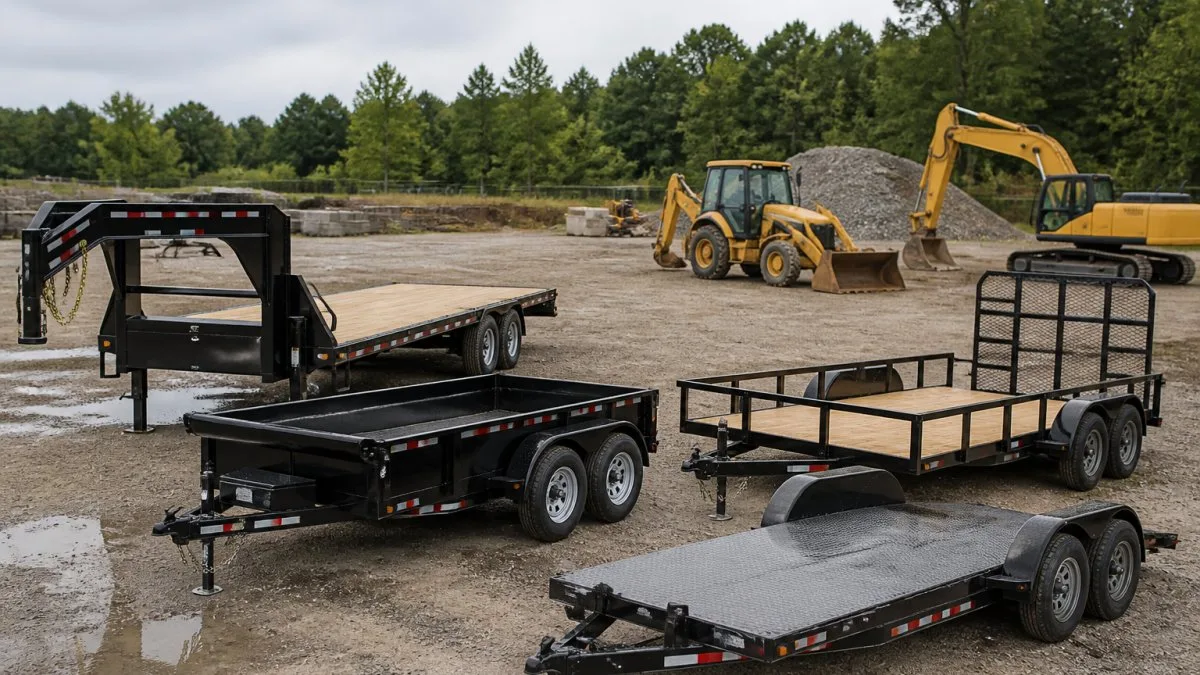
Construction equipment trailers come in three main types: gooseneck, bumper-pull utility, and dump.
Gooseneck vs. Bumper-Pull Trailers
A gooseneck trailer connects to a hitch mounted in the truck bed over the rear axle, giving a lower center of gravity and better weight distribution for heavier loads.
Bumper-pull trailers connect to a standard rear hitch.
For most contractors moving tools and equipment daily, a gooseneck wins if your truck has the payload capacity. The stability and load-carrying ability pay for themselves in fuel efficiency and safety.
Dump Trailers for Debris and Material Hauling
Dump trailers flip the load up and backward, unloading debris, soil, and demolition waste without manual labor, saving enormous time when hauling multiple loads per day.
The critical spec is dump angle: steeper is better for sticky material like wet clay or concrete. Single-acting cylinders are simpler and cheaper, but double-acting give more control. A solid gate with good latches won't pop open on rough roads.
Weight capacity is everything. Know your truck's actual payload capacity, not just the GVWR; an overloaded dump trailer is dangerous and damages your suspension.
Utility Trailers for Open-Load Transport
Utility trailers are the simplest and most versatile. Open sides let you load from any angle, hauling lumber, ladders, landscaping equipment, or anything that doesn't need weather protection.
The frame and suspension separate good utility trailers from ones that fall apart. Tube construction is stronger than channel steel, leaf spring suspension is common and reliable, and axle rating tells you the maximum weight each axle handles, add both for total capacity.
Trailer Payload Capacity and GVWR: Critical Calculations
This is where most contractors get it wrong. GVWR (Gross Vehicle Weight Rating) is the maximum total weight of the loaded trailer, but you also need the empty trailer weight, often called curb weight or shipping weight.
Subtract empty weight from GVWR to get actual payload capacity. A trailer rated at 10,000 pounds GVWR that weighs 3,000 pounds empty can only carry 7,000 pounds. Load it with 8,000 and you're over capacity, which can void your warranty and create a genuine safety hazard.
The four numbers you actually need
Before you shop, write down these four figures for your truck and trailer combination:
- Trailer GVWR, the maximum loaded weight the trailer is rated to carry, stamped on the VIN label.
- Trailer empty weight, the weight of the trailer with no cargo, also on the VIN label or a certified scale ticket.
- Trailer payload, GVWR minus empty weight. This is the number that matters for loading.
- Tow vehicle payload and tow rating, from the driver's door jamb sticker and the owner's manual, not from a sales brochure.
Worked example: a 14,000 lb dump trailer
A 14,000 lb GVWR dump trailer weighing 4,200 lb empty has 9,800 lb payload. Contractors underestimate debris weight: drywall and wood framing are light per cubic yard, but concrete, brick, and tile are heavy, so a partially filled bed can hit payload faster than it looks full. Weigh your first few mixed-debris loads at a certified scale to learn what "full" weighs for your material mix.
Worked example: an enclosed cargo trailer for tools
An 8.5 x 20 enclosed cargo trailer might have a 10,000 lb GVWR and weigh 3,400 lb empty, leaving 6,600 lb of payload, generous until you add a loaded tool chest, compressors, generators, ladders, and material. Payload is a ceiling, not a target.
Tongue weight and your truck's limits
Tongue weight is the downward force the loaded trailer puts on your hitch. A common rule of thumb is 10% to 15% of loaded trailer weight for a bumper-pull, somewhat higher for a gooseneck.
The math that catches contractors: trailer payload plus tongue weight must not exceed your truck's payload capacity, which already accounts for passengers, fuel, tools in the bed, and tongue weight. Add a crew of three, a fuel tank, and a loaded toolbox, and available tongue weight shrinks fast.
Never rely on the trailer dealer's advertised "towing capacity" alone. The binding limits are the trailer GVWR, the trailer payload, your truck's payload rating, your truck's rear axle rating (GAWR), and your hitch's rated capacity. The lowest of those numbers is your real ceiling.
A quick pre-purchase checklist
- Confirm the trailer's VIN label shows GVWR and empty weight, not just a marketing payload figure.
- Check your truck's door jamb sticker for payload and rear GAWR.
- Confirm your hitch and ball are rated for the loaded trailer weight and tongue weight.
- Weigh your first loaded trip at a certified scale to calibrate what "full" means for your materials.
- Recheck the numbers whenever you add a new tool, a bigger crew, or a heavier material mix.
Get this wrong and you'll spend thousands on truck repairs, plus downtime you can't bill for. Get it right and the trailer becomes a predictable, productive asset.
Trailer Materials: Aluminum vs. Steel Construction
Most guides stop at "steel is stronger, aluminum is lighter." For construction work, the failure modes you'll actually see on a job site are more specific.
What steel actually does well, and where it fails
Steel frames are heavier but stronger and handle impact better, absorbing knocks from loading equipment with a skid steer or backing into rubble. Steel also costs less to manufacture, which is why most budget and mid-range construction trailers use it.
The failure mode to watch is corrosion. Steel rusts from the inside out when moisture gets trapped in boxed frame sections or behind skin panels, and rain, mud, wet debris, and road salt find their way into crevices constantly.
What aluminum actually does well, and where it fails
Aluminum doesn't rust the way steel does; it forms a thin oxide layer that protects the surface, making it attractive for wet climates or trailers stored outside year-round. Aluminum frames weigh less, so you carry more cargo with the same truck and burn less fuel.
The catch is cost and repairability. Aluminum costs more upfront, and its welds can crack under repeated cyclic stress if poorly executed or if joint design concentrates load.
The hybrid construction most premium trailers use
A common pattern among premium construction trailers is an aluminum exterior skin over a steel frame: corrosion resistance and lighter weight on weather-facing surfaces, plus the strength and repairability of steel in the structure. The skin is also easier to replace than a structural panel if dented or punctured.
Total cost of ownership: the part the spec sheet misses
Purchase price is only the first number. Over the trailer's life, the bigger costs are maintenance, repairs, tires, downtime, and resale value.
- Maintenance: painted steel needs periodic inspection and touch-up at welds, seams, and stone-chip areas; aluminum-skinned trailers need less cosmetic upkeep but still need seam and sealant checks.
- Repairs: steel repairs are widely available; aluminum repairs are more specialized, cost more per hour, and take longer to schedule.
- Tires and running gear: these costs are similar across frame materials, but a heavier steel trailer can wear tires and brakes slightly faster on the same routes.
- Downtime: the real cost of a repair is the days the trailer isn't earning. Contractors underestimate how much a two-week parts wait costs in rented replacements and missed schedules.
- Resale: well-maintained trailers from established brands hold value, and aluminum-skinned units often command a premium in wet or coastal markets where buyers are corrosion-sensitive.
A practical decision framework
- Choose steel (painted or galvanized) if you work in rough conditions, load with equipment, want widely available repairs, and are disciplined about washing and touching up the frame.
- Choose aluminum or aluminum-skinned if you're in a wet or coastal climate, store the trailer outside, tow long distances where weight matters, and have access to a shop qualified to repair aluminum.
- Choose a hybrid (aluminum skin on steel frame) if you want most of the corrosion resistance with the repairability of a steel structure. This is the most common construction-trailer configuration among premium brands for good reason.
The material question isn't "which is better." It's "which failure mode can I live with, and which can I get repaired quickly in my area?" Answer that before you compare price tags.
Build Quality and Durability: What Separates Premium Brands
Premium trailer brands invest in welding quality, frame design, and component selection; budget brands cut costs with thinner materials and cheaper fasteners.
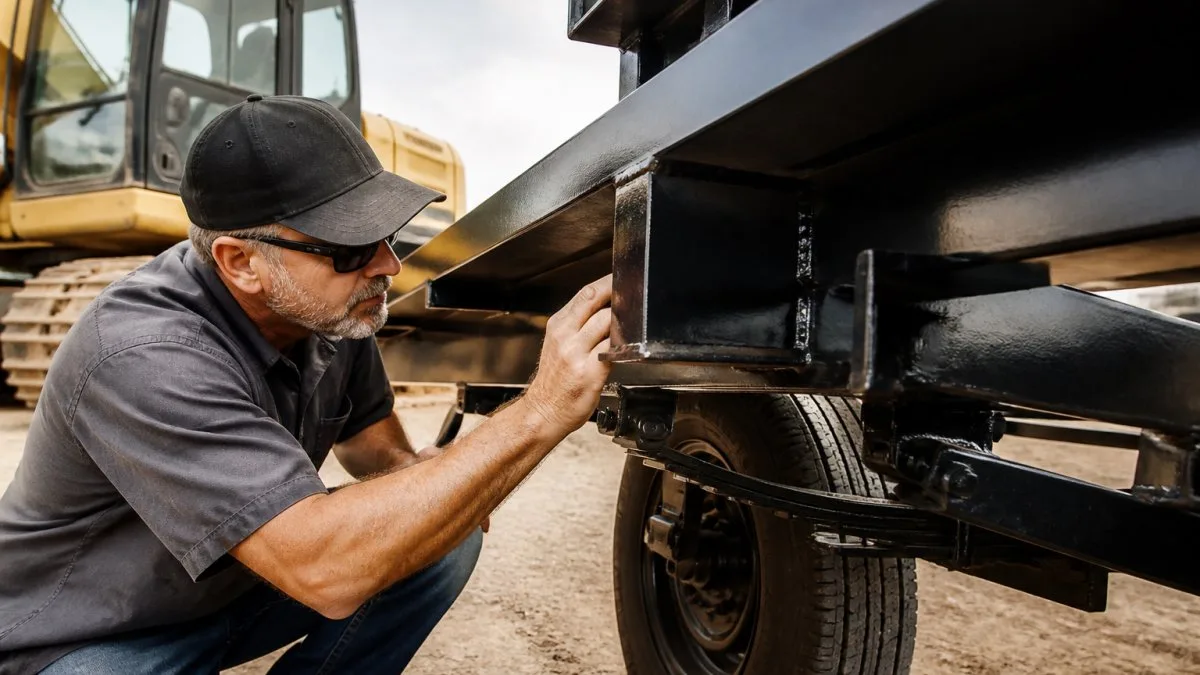
Look at the welds. Good welding is smooth and continuous; cheap welding is spotty and uneven, and welds that crack under stress come from poor workmanship or inadequate material.
Frame design matters.
Suspension design separates trailers that last from ones that wear out fast. Leaf springs are proven and simple; air suspension is smoother but more complex.
Don't assume all trailers in the same size category are equivalent.
Warranty, Parts Availability, and Long-Term Support
A warranty is only as good as the dealer who backs it up.
Parts availability is the real test. Can you get a replacement axle, hitch, or light assembly on short notice?
Repairability matters more than you'd think.
True North Trailers and Equipment backs what we sell. If something goes wrong, we can help you fix it quickly.
Ask any dealer about their warranty claims process before you buy. If they're vague or defensive, that's a red flag.
At True North Trailers and Equipment, we help contractors find trailers that fit their actual workflow and budget. Visit True North Trailers and Equipment to explore our full inventory of gooseneck, dump, enclosed cargo, and utility trailers.
| Trailer Type | Best For | Key Consideration |
|---|---|---|
| Enclosed cargo | Tools, materials, security | Interior height and tie-down points |
| Gooseneck | Heavy loads, stability | Truck bed space and payload capacity |
| Dump | Debris, soil, demolition | Hydraulic system and gate design |
| Utility | Versatile, open-load | Frame strength and suspension quality |
Frequently Asked Questions
What type of trailer is best for hauling construction equipment?
The best trailer depends on your specific equipment and job-site needs. Enclosed cargo trailers protect tools and materials from weather and theft, making them ideal for HVAC contractors and electricians. Gooseneck trailers offer superior stability and higher payload capacity for heavy equipment. Dump trailers work best for debris and bulk materials. Evaluate your typical loads, towing vehicle capacity, and whether weather protection is essential before choosing.
How do I choose the right trailer capacity for a construction job?
Start by calculating your total load weight, including the trailer itself. Check your vehicle's towing capacity and the trailer's GVWR (Gross Vehicle Weight Rating). The payload capacity equals GVWR minus the empty trailer weight. For construction work, add 20% buffer to your typical load weight to account for heavier jobs. Consult your trailer's VIN-specific documentation for exact weight information, and never exceed manufacturer ratings.
Is aluminum or steel better for a construction trailer?
Steel frames offer superior strength and durability for heavy loads and rough job sites, though they require regular maintenance to prevent rust. Aluminum exteriors resist corrosion and reduce overall trailer weight, improving fuel efficiency. Many premium construction trailers combine steel tube frames for structural integrity with aluminum skins for weather protection. Your choice depends on climate exposure, typical load types, and maintenance capacity. Steel demands more upkeep but handles extreme abuse better.
How do I know if a trailer brand will actually last and provide reliable support?
Look for manufacturers offering comprehensive warranties and readily available replacement parts in your area. Check dealer support infrastructure and whether the company stands behind its products after purchase. Independent dealers like True North Trailers and Equipment provide ongoing service and can help with repairs or modifications. Read reviews from contractors in your trade, ask about warranty terms, and verify that parts availability won't leave you stranded during job-site breakdowns.