


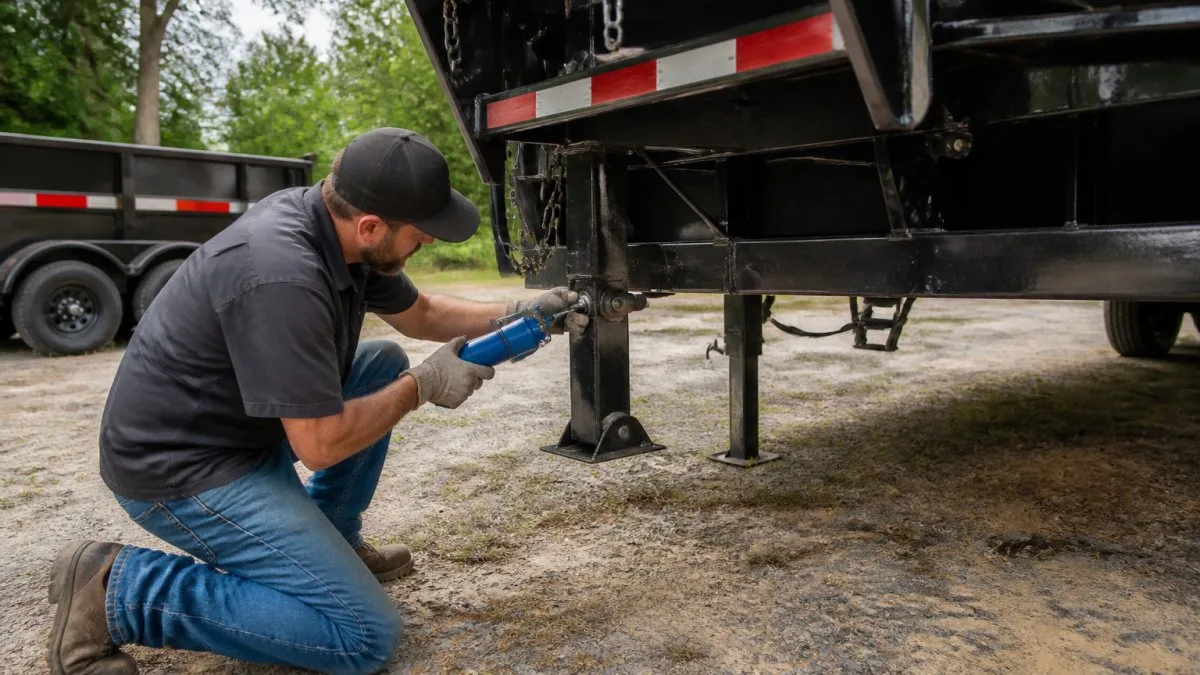
Table of Contents
- Why Gooseneck Trailer Maintenance Matters
- Create Your Gooseneck Trailer Maintenance Checklist
- Gooseneck Trailer Tire Inspection and Rotation
- Gooseneck Trailer Wheel Bearing Maintenance and Lubrication
- Gooseneck Trailer Brake Maintenance and Inspection
- Inspect the Hitch, Coupler, and Safety Systems
- Check Lighting, Electrical, and Structural Integrity
- Storage and Seasonal Care for Extended Service Life
- Frequently Asked Questions
Last Updated: October 19, 2026
Why Gooseneck Trailer Maintenance Matters
Regular gooseneck trailer maintenance keeps your equipment safe and dependable, preventing costly breakdowns and extending the life of your investment.
Neglect creates real problems: tires fail without warning, brakes deteriorate silently, and wheel bearings seize. Mid-job, that costs you time, money, and credibility.
A simple inspection routine catches problems early, and most tasks take minutes, not hours. Follow a structured schedule to avoid emergency repairs and keep your gooseneck trailer running strong for years.
Create Your Gooseneck Trailer Maintenance Checklist
A checklist only works if it matches how you use the trailer. A landscaper towing a 7,000-lb trailer daily on pavement needs a different rhythm than a contractor hauling a 14,000-lb skid steer over gravel a few times a month. Use the baseline intervals below, then adjust with the modifiers that follow.
Baseline Inspection Intervals
Before every trip (about 10 minutes):
- Walk around the trailer and check all tires for visible damage, bulges, or punctures.
- Verify brake lights, turn signals, and clearance lights work with the tow vehicle connected.
- Confirm the deck is clear, tie-down points are secure, and the load is balanced over the axles.
Every two weeks or 500 miles (about 30 minutes):
- Check tire pressure on all tires, including the spare, when tires are cold.
- Inspect wheel nuts for tightness and look for rust streaks that indicate a loose nut.
- Clean and lightly grease the coupler and ball; check the latch adjustment.
Quarterly or every 5,000-7,000 miles:
- Rotate tires and check tread depth and wear patterns.
- Inspect brake pads, magnets, and wiring; check hydraulic fluid if equipped.
- Inspect wheel bearings for heat, noise, and grease condition; plan a repack if due.
Annually or seasonally:
- Repack wheel bearings (or sooner in wet or dusty conditions).
- Flush and replace hydraulic brake fluid if equipped.
- Replace the breakaway battery per its rated life.
Adjust Intervals for Load and Conditions
Use these modifiers to tighten the schedule when the trailer works harder:
- Heavy loads near GVWR: Shorten bearing repack and brake inspection intervals by roughly half. Heavy loads generate more heat in bearings and brakes.
- Frequent towing (daily or near-daily): Move the two-week checks to weekly and the quarterly checks to every 2,500-3,000 miles.
- Rough roads, gravel, or construction sites: Check wheel nuts, U-bolts, and suspension hardware more often, vibration loosens fasteners. Inspect for cracked welds at every pre-trip.
Pass/Fail Thresholds
A checklist is only useful if you know when a finding means stop. Use these thresholds:
| Item | Pass | Fail, Do Not Tow |
|---|---|---|
| Tire tread | Above wear bars | At or below wear bars, or any bulge or cut |
| Tire pressure | Within manufacturer spec | More than a few psi low, or rapid loss |
| Wheel bearing | Cool hub, smooth rotation | Hot hub, grinding, or wobble |
| Brakes | Firm pedal or controller response | Soft pedal, pull, or weak braking |
| Coupler | Latched, pinned, adjusted | Loose latch, crack, or worn ball |
| Frame/neck | No cracks | Any crack or bent neck |
| Lights | All function | Any brake or turn light out |
Print this checklist and keep a copy in the tow vehicle. A clipboard with the intervals and pass/fail thresholds turns a vague intention to "check the trailer" into a routine you actually complete, and gives you a maintenance record.
Record Keeping
Log the date and mileage of each inspection and service. A written record tells you when the next repack, brake service, or tire replacement is due, and supports resale value.
Gooseneck Trailer Tire Inspection and Rotation
Tires are your trailer's foundation: proper maintenance prevents blowouts, extends tire life, and improves towing safety.
Tire pressure matters more than most owners realize. Underinflation causes overheating and sudden failure; overinflation causes uneven wear and reduced load capacity.
For tread depth, use the penny test: insert a penny with Lincoln's head down.
Rotate tires every 5,000-7,000 miles to promote even wear.
Common tire problems to watch for:
- Bulges or blisters on the sidewall (tire failure imminent)
- Cracks or cuts in the tread or sidewall (replace immediately)
- Uneven wear on one side (alignment or suspension issue)
Replace all tires at once if possible.
Gooseneck Trailer Wheel Bearing Maintenance and Lubrication
Wheel bearings let your wheels spin freely.
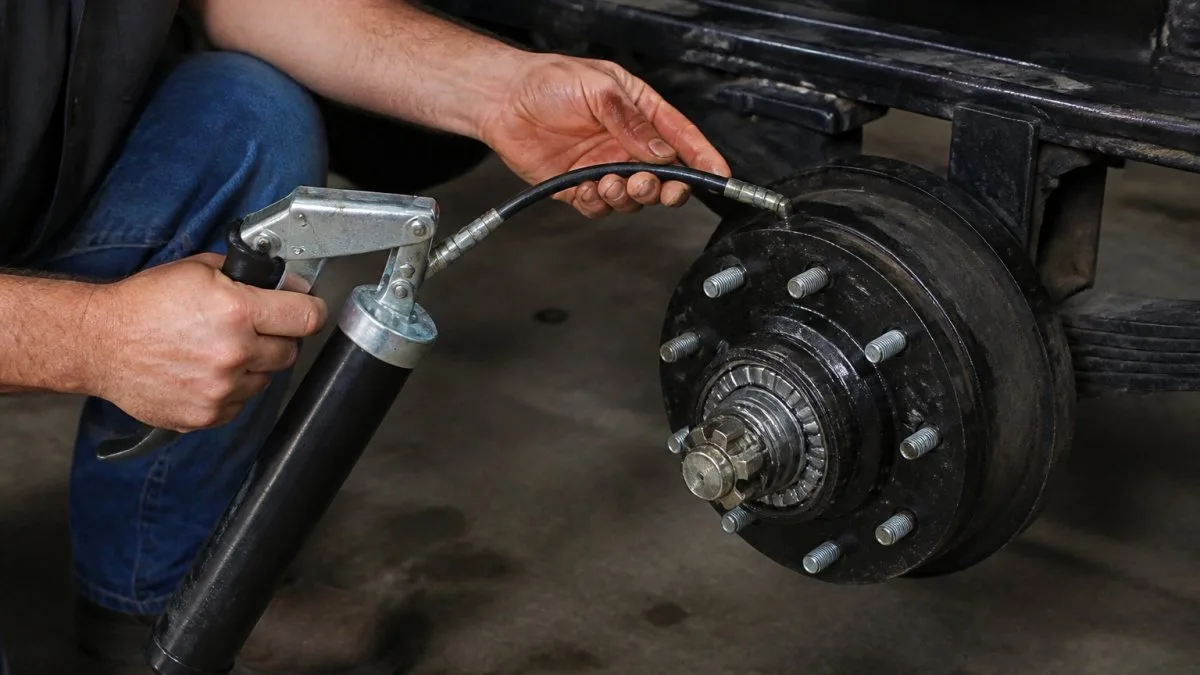
Inspect bearings regularly and repack with grease every 1-2 years or 5,000-10,000 miles, depending on use and conditions.
Repacking bearings requires these steps:
- Remove the wheel and brake assembly
- Pull the bearing out of the hub
- Clean old grease completely with solvent
- Pack new grease into the bearing cavity
- Reinstall the bearing and wheel
This takes about 30 minutes per wheel once you know the process.
Signs of bearing problems:
- Grinding or rumbling noise from the wheel area
- Excessive heat on the wheel hub (use caution when touching)
- Loose or wobbly wheel movement
Address these symptoms immediately. A failed bearing can lock up a wheel or cause it to separate from the trailer, both dangerous and expensive.
Gooseneck Trailer Brake Maintenance and Inspection
Brakes are your safety system; regular inspection ensures reliable stopping even under heavy load.
Gooseneck brake systems vary by model: some use hydraulic brakes powered by the tow vehicle, others electric brakes with a separate controller. Know which you have and follow its specific requirements.
Hydraulic brake maintenance:
- Check brake fluid level monthly
- Bleed air from brake lines if braking feels spongy
- Inspect hoses for leaks or damage
Electric brake maintenance:
- Test brake controller function regularly
- Inspect wiring connections for corrosion
- Clean brake magnets of dirt and rust
Brake performance degrades gradually, and many owners don't notice until braking is dangerously weak. Test brakes regularly under controlled conditions; if stopping distance increases or the pedal feels soft, have the system inspected immediately.
Inspect the Hitch, Coupler, and Safety Systems
The gooseneck coupler sets a gooseneck apart from a bumper-pull, and it's the most neglected component. It transfers every pound of tongue weight and every braking and cornering force into the tow vehicle.
Most gooseneck trailers use one of two styles: a coupler that drops onto a ball in the truck bed, or a kingpin that locks into a fifth-wheel hitch.
Gooseneck Ball Coupler Inspection
A ball coupler's adjustable locking mechanism must grip the ball firmly without binding. Check:
- Ball condition: Wipe the ball clean and inspect for flat spots, galling, or heavy rust. A worn ball with flat spots will not hold adjustment and should be replaced.
- Coupler socket: Look inside the coupler for cracks, elongated wear, or a worn latch. Shine a light into the socket, cracks often start at the weld where the coupler meets the neck.
- Latch and safety pin: The latch must snap over the ball with a positive click and the safety pin or lock must seat fully. If the latch closes loosely or the pin will not seat, the coupler is out of adjustment or worn out.
Kingpin and Fifth-Wheel Inspection
If your trailer uses a kingpin:
- Inspect the kingpin for wear, cracks, and a loose mounting plate.
- Check the fifth-wheel jaws for wear and confirm the locking handle engages fully with the safety latch closed.
- Lubricate the fifth-wheel plate per the hitch manufacturer's instructions, typically a light film of grease on the plate, not the jaws.
Mounting Points and Neck Structure
The coupler is only as strong as what it bolts to: the neck structure and mounting plate or brackets.
- Check every bolt and U-bolt at the coupler-to-neck connection for tightness and corrosion. Loose mounting bolts allow the coupler to shift and crack welds.
- Inspect the welds where the neck meets the coupler and where the neck meets the trailer deck for cracks, undercut, or rust bleeding. A crack at the neck-to-deck weld is a stop-towing condition.
- Look for bending or distortion in the neck itself. A neck that has been overloaded or involved in a hard landing may be bent even if no crack is visible.
If you find a crack in the coupler, the neck, or the neck-to-deck weld, stop towing and have it inspected by a qualified welder or trailer shop. Do not attempt to tow on a cracked neck, even a short distance.
Safety Chains and Breakaway System
Safety chains and the breakaway system are your backup if the coupler fails, but only if correctly rated, attached, and functional.
- Chains: Confirm the chains are rated for the trailer's gross vehicle weight rating (GVWR), the rating is stamped on the chain or its tag. Check for cracked links, worn clevis hooks, and stretched or bent links. Attach chains in a crossed pattern under the coupler so the trailer tongue is caught if it drops.
- Breakaway cable and switch: Pull the breakaway pin to confirm the trailer brakes apply, then reset it. Check the cable for fraying and confirm it is long enough to reach the tow vehicle but short enough to pull if the trailer separates. Replace a frayed cable rather than taping it.
- Breakaway battery: Most electric-brake trailers have a small battery that powers the brakes if the trailer separates. Test it with the built-in test button or a meter, and replace it per the manufacturer's interval, typically every few years. A dead breakaway battery means the emergency braking system will not work.
Pass/Fail Quick Reference
| Check | Pass | Fail, Stop Towing |
|---|---|---|
| Ball | Smooth, round, light grease | Flat spots, galling, heavy rust |
| Coupler latch | Snaps closed, pin seats | Loose latch, pin will not seat |
| Coupler/neck welds | No cracks, no rust bleed | Any visible crack |
| Mounting bolts | Tight, no corrosion | Loose, missing, or heavily corroded |
| Safety chains | Rated, intact, crossed | Cracked, stretched, or underrated |
| Breakaway | Brakes apply when pin pulled | No brake application, dead battery |
A few minutes with a light, a wrench, and a grease gun at every hookup prevents the failure that ends towing trips, and worse, for gooseneck owners.
Check Lighting, Electrical, and Structural Integrity
Lighting helps other drivers see your trailer and understand your intentions, and electrical problems develop slowly, so inspect regularly.
Lighting inspection:
- Test all brake lights, turn signals, and clearance lights
- Verify lights respond correctly to tow vehicle controls
- Check for corroded or loose connections
Electrical connections:
- Inspect the trailer plug connector for corrosion
- Clean connector pins with a wire brush if needed
- Verify the connector fits snugly without wiggling
Structural integrity:
- Walk the frame and look for new cracks or stress fractures
- Check welds for separation or corrosion
- Inspect steel surfaces for rust development
Rust develops fastest where moisture and salt collect, and undercarriage components corrode quickly in winter. Regular inspection catches rust before it weakens structural components: minor rust can be cleaned and painted, while severe corrosion requires professional repair or replacement.
| Inspection Area | Frequency | What to Check | Action if Problem Found |
|---|---|---|---|
| Tires | Before every trip | Pressure, tread, damage | Adjust pressure or replace |
| Wheel bearings | Every 5,000-7,000 miles | Heat, noise, grease | Repack or replace |
| Brakes | Quarterly | Response, fluid, pads | Service or bleed system |
| Coupler | Every two weeks | Cleanliness, damage, lock | Clean, grease, or repair |
| Lights | Every two weeks | Function, connections | Replace bulbs or repair |
| Frame | Quarterly | Cracks, rust, welds | Clean, paint, or weld |
Storage and Seasonal Care for Extended Service Life
Proper storage protects your trailer in the off-season. A few simple steps prevent rust, tire damage, and electrical problems while it sits unused.
Winter storage preparation:
- Clean the trailer thoroughly to remove dirt and salt
- Drain hydraulic fluid if your trailer has hydraulic brakes
- Disconnect the battery to prevent electrical drain
Summer storage tips:
- Park in a covered area if possible to prevent UV damage
- Use tire covers to protect from sun exposure
- Keep the coupler covered to prevent rust
Before returning to use:
- Inspect all systems as if preparing for a new season
- Check tire pressure and condition
- Test all lights and electrical connections
Long-term storage requires more care than regular use. Rubber deteriorates without movement. Seals dry out. Metal oxidizes. By following these steps, your trailer will be ready to work when you need it.
Proper gooseneck trailer maintenance prevents expensive repairs and keeps your equipment safe on every job. Visit True North Trailers and Equipment to explore our full selection of gooseneck trailers with flexible financing options that work for your operation.
Frequently Asked Questions
How often should you inspect a gooseneck trailer?
Perform a pre-trip inspection before every trip, a detailed routine inspection every two weeks or 500 miles, and a comprehensive annual maintenance check. Load, towing conditions, and storage environment may require more frequent inspections. Heavy-use trailers benefit from quarterly condition checks. Regular inspection prevents small issues from becoming expensive repairs and extends your trailer's service life significantly.
What is the proper way to maintain gooseneck trailer wheel bearings?
Inspect wheel bearings annually or every 5,000-7,000 miles. Clean the bearings thoroughly, check for wear or damage, and repack them with high-quality bearing grease rated for trailer use. Proper lubrication reduces friction, prevents rust, and extends bearing life to 3-5 years or more. Use a grease gun to apply grease evenly, and always use the manufacturer-recommended grease type for your specific trailer model.
How do you prevent rust and corrosion on a gooseneck trailer?
Clean your trailer regularly, especially after exposure to salt, mud, or moisture. Inspect the frame and structural welds for early signs of rust. Apply a protective coating to bare metal areas, and store the trailer in a dry location when not in use. Proper tire inflation and bearing lubrication also prevent moisture buildup. Addressing rust early prevents structural damage and keeps your trailer safe for towing.
What should you check during a gooseneck trailer tire inspection?
Check tire pressure monthly and before every trip; maintain pressure per manufacturer specifications. Inspect tread depth using the penny test (insert a penny into the tread; if you see Lincoln's head, replace the tire). Rotate tires every 5,000-7,000 miles to prevent uneven wear. Look for cuts, cracks, sidewall damage, and bulges. Proper tire inflation and rotation extend tire life, improve fuel efficiency, and reduce the risk of blowouts during towing.