


Table of Contents
- What Makes a Utility Trailer Durable for Debris Hauling
- Utility Trailer Sizes and Weight Capacity for Different Jobs
- Utility Dump Trailers vs. Open Trailers: Which Works Best
- Utility Trailer Weight Capacity: Understanding GVWR and Payload
- Trailer Tie-Down Points and Load Containment Features
- Top Durable Trailers for Debris Hauling: 7 Reliable Options
- How to Choose the Right Durable Trailer for Your Debris Hauling Needs
- Maintenance and Long-Term Durability
- Frequently Asked Questions
Last Updated: October 18, 2026
What Makes a Utility Trailer Durable for Debris Hauling
A durable utility trailer for debris hauling combines reinforced construction, strategic weight distribution, and materials built to withstand repeated heavy loads.
Contractors and property owners often underestimate the abuse a trailer takes during debris removal: rocks, concrete chunks, and sharp metal edges assault the bed, mud and moisture work into crevices, and the trailer bounces over rough terrain weekly.
The most durable utility trailers share core characteristics: solid steel frames that resist twisting under uneven loads, heavy-gauge steel beds (3/16 inch or thicker) that withstand punctures and abrasion, sealed bearings that keep water out, and gusseted tie-down points that won't tear through sidewalls.
Utility Trailer Sizes and Weight Capacity for Different Jobs
Trailer size determines what you can haul and how often you'll make trips. A 5x8-foot utility trailer handles small residential cleanups and landscape debris, while a 6x12-foot or 6x14-foot trailer suits contractors handling multiple jobsites.
Load capacity breaks down into payload capacity and gross vehicle weight rating (GVWR). Payload is what the trailer can carry after its own weight is subtracted.
Single-axle utility trailers typically max out at 5,000 to 7,000 pounds GVWR, working well for light debris, mulch, and landscape materials. Tandem-axle dump trailers push into 10,000 to 16,000 pounds GVWR for heavy concrete, asphalt, and soil removal, though they require a truck with adequate capacity and brakes.
| Trailer Type | Typical GVWR | Payload Capacity | Best For |
|---|---|---|---|
| Single-axle utility | 5,000-7,000 lbs | 3,000-5,000 lbs | Light debris, mulch, small loads |
| Single-axle dump | 7,000-10,000 lbs | 4,500-7,000 lbs | Medium debris, soil, gravel |
| Tandem-axle dump | 12,000-16,000 lbs | 8,000-12,000 lbs | Heavy concrete, asphalt, bulk material |
Utility Dump Trailers vs. Open Trailers: Which Works Best
The choice between a dump trailer and an open utility trailer hinges on what you're hauling and how much convenience matters. Both are durable when built properly, but they solve different problems.
Dump Trailer Benefits for Heavy Debris
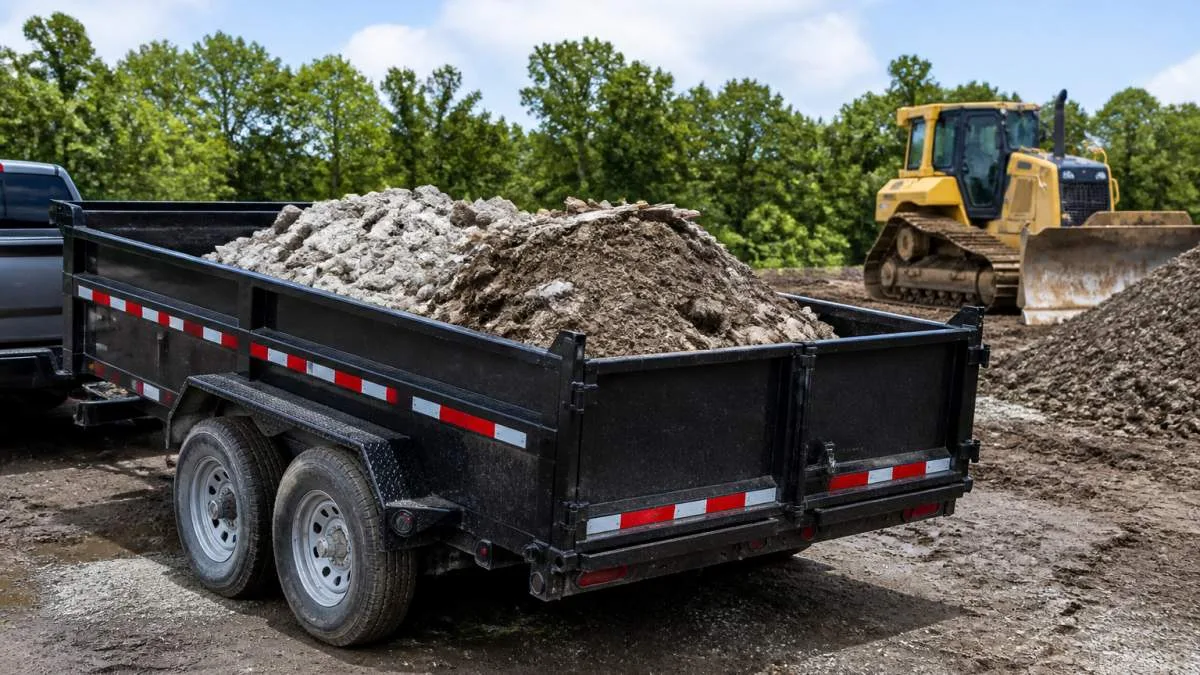
Dump trailers use hydraulic cylinders to tilt the entire bed, letting gravity unload material without shoveling, a huge time and labor saver with concrete, soil, and gravel.
Dump trailers excel at dense, heavy debris. The tilting action works for materials that won't roll or slide easily, concrete chunks, asphalt, packed soil, and demolition waste all come out cleanly, with solid sides and a tailgate for built-in load containment.
The durability advantage of dump trailers lies in their construction.
Dump trailers require regular hydraulic system maintenance. Fluid leaks, worn seals, and corroded cylinders reduce performance and eventually prevent the bed from tilting. Budget for annual inspections and seasonal fluid checks to keep the system reliable.
Open Utility Trailers for Flexible Hauling
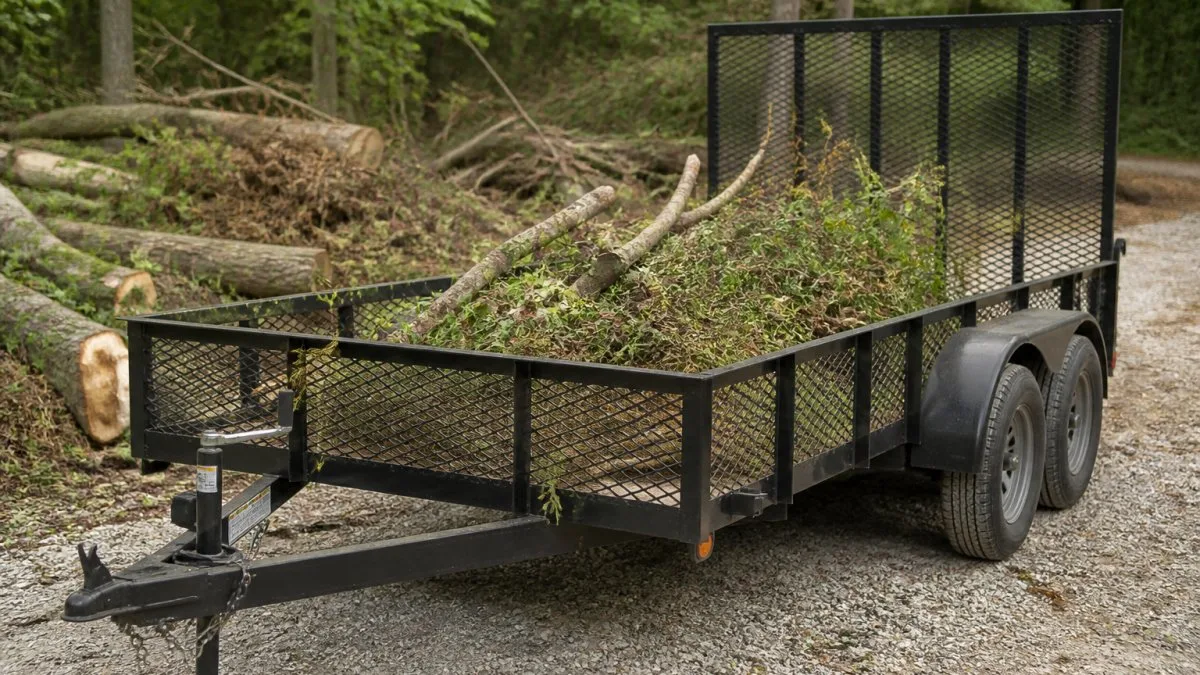
Open utility trailers are flat beds with low or removable sides, offering maximum flexibility for odd-sized loads like landscape gates, ramps, equipment, or large debris pieces that wouldn't fit in a dump trailer.
Durability in open trailers comes from solid construction rather than mechanical complexity: reinforced frame welds, heavy-gauge steel decking, and quality tie-down points.
Open trailers work best for mixed loads where you're not hauling the same material repeatedly, broken wood, metal, plastic, and mixed demolition waste in the same trailer.
Utility Trailer Weight Capacity: Understanding GVWR and Payload
GVWR is the maximum total weight the trailer can safely carry, including its own weight, set by the manufacturer and printed on the certification plate.
Payload capacity is GVWR minus the empty trailer weight. A trailer weighing 2,500 pounds empty with a 10,000-pound GVWR has 7,500 pounds of payload, the only number that matters when deciding what to load.
Your towing vehicle's capacity matters equally. Your truck's owner manual lists maximum towing capacity and tongue weight limits.
Use a scale at a local landfill or recycling center to weigh your loaded trailer before leaving the jobsite. Most charge a small fee and give you a printout. This takes the guesswork out of whether you're within capacity and prevents costly overload mistakes.
Trailer Tie-Down Points and Load Containment Features
Tie-down points are reinforced anchor locations for securing loads with straps or chains.
Load containment varies by trailer type. Open utility trailers rely on removable side panels or landscape gates.
Tie-down durability depends on material and installation. Welded attachment points outlast bolted ones, which loosen and can tear through the bed under vibration.
Ramps factor into durability too.
Top Durable Trailers for Debris Hauling: 7 Reliable Options
1. Big Tex Utility & Landscape Trailers
Big Tex builds utility and landscape trailers with reinforced steel frames and dependable suspension designed for daily wear and tear, with durable decking and configurations suited to repeated debris hauling. Models range from single-axle options for light work to tandem configurations for heavier loads.
These trailers are built for contractors who need equipment that handles the jobsite grind: frames resist twisting, suspension absorbs shock from rough terrain, and tie-down points are placed for secure load containment. True North Trailers and Equipment can help you find the right Big Tex model for your debris hauling needs and discuss availability.
2. Diamond C Dump Trailers
Diamond C offers a lineup spanning light-duty single-axle residential models to heavy-duty configurations, including gooseneck dump trailer options, so you can match capacity to your actual hauling needs without over-buying.
Diamond C's durability reputation comes from sealed hydraulic systems, heavy-gauge steel beds, and reinforced frames that withstand repeated loading cycles and rough jobsite conditions. Gooseneck options provide better weight distribution and easier towing for larger loads.
3. CAM Superline Dump Trailers
CAM Superline builds dump trailers specifically for daily commercial use, with heavy-gauge steel construction and sealed components engineered for contractors running multiple jobs per week.
CAM Superline prioritizes materials and construction methods that survive harsh conditions: heavy-gauge steel beds resist punctures and dents, sealed bearings keep water out, and reinforced frame welds hold up to thousands of load cycles.
4. Load Trail DE8314 Dump Trailer
The Load Trail DE8314 is a dump trailer designed for daily hauling of soil, mulch, gravel, and debris, the materials contractors move most often.
Load Trail trailers are known for straightforward, no-frills durability, with frames and beds built to last through seasons of regular use and reliable standard hydraulic systems. True North Trailers and Equipment can discuss the DE8314's specific capacity and features relative to your hauling requirements.
5. Texas Pride DT Tandem Dump Trailers
Texas Pride DT tandem trailers offer a tandem-axle configuration for daily hauling of soil, mulch, gravel, and debris.
Texas Pride tandem-axle trailers use reinforced frames and heavy-gauge steel beds to handle the extra stress of heavier loads, while sealed bearing hubs and corrosion-resistant paint extend service life. The tandem configuration also improves traction and control on rough terrain.
6. Lamar Dump Trailers
Lamar offers a range of dump trailers built for tough, reliable performance, with single-axle and tandem configurations to fit different hauling needs. Lamar's reputation centers on straightforward, durable construction that handles repeated use without excessive maintenance.
Lamar trailers use quality materials and proven frame designs. Hydraulic systems are sealed and protected. Tie-down points are reinforced. For contractors who want a dependable dump trailer, Lamar represents solid value.
7. Aluma UTR12S-R Compact Utility Trailer
The Aluma UTR12S-R is a compact, all-aluminum utility trailer designed for light-duty hauling. All-aluminum construction resists corrosion, making it ideal for coastal areas or wet climates where rust is a constant concern. The compact size works well for small debris loads, landscaping materials, and property maintenance.
Aluminum construction provides durability through corrosion resistance, and the UTR12S-R is lighter than steel trailers, reducing towing strain and fuel consumption.
How to Choose the Right Durable Trailer for Your Debris Hauling Needs
Choosing the right trailer starts with an honest assessment of what you actually haul and how often. Too many contractors buy based on what they might need someday, then end up towing oversized equipment around empty.
Assess Your Typical Load Weight and Volume
Write down the materials you haul most often and estimate how much. Gravel and soil are dense and reach payload limits quickly by weight, while mixed debris is bulky and reaches capacity by volume before hitting weight limits.
Calculate how many trips you make per week and what percentage use maximum capacity. If you max out payload once a week and run light the other four days, a smaller, more fuel-efficient trailer may be smarter.
Consider Axle Configuration and Towing Capacity
Single-axle trailers are lighter, easier to maneuver, and require less towing capacity, working well for loads under 7,000 pounds. Tandem-axle trailers handle heavier loads and distribute weight better on rough terrain, but require a truck rated for higher towing capacity and cost more upfront.
Check your truck's owner manual for maximum towing capacity and tongue weight limits. A truck rated for 8,000 pounds can't safely pull a 10,000-pound trailer regardless of the trailer's rating.
Evaluate Durability Features and Construction
Compare frame construction, welded joints outlast bolted ones. Check bed material thickness; 3/16-inch steel is the minimum for debris hauling. Look for sealed bearing hubs, corrosion-resistant paint, and reinforced tie-down points, and ask about warranty coverage on the frame and hydraulic system.
Visit True North Trailers and Equipment to inspect trailers in person, see the welds, feel the steel thickness, and understand construction quality firsthand.
The cheapest trailer upfront often costs the most over its lifetime through repairs, downtime, and replacement. Investing in proven durability saves money in the long run because your equipment stays on the job instead of in the shop.
Maintenance and Long-Term Durability
Durable trailers stay durable only if you maintain them.
Check tire pressure and condition before each trip.
For dump trailers, check hydraulic fluid regularly and have the system inspected annually.
Wash your trailer regularly, especially if you haul wet materials or work in coastal areas.
Store your trailer in a covered area when not in use.
Choosing a durable utility trailer for debris hauling requires matching capacity to your actual needs and prioritizing construction quality over lowest price. True North Trailers and Equipment carries proven models from Big Tex, Diamond C, CAM Superline, Load Trail, Texas Pride, Lamar, and Aluma, with flexible financing options to fit your budget.
Frequently Asked Questions
What type of trailer is best for hauling debris?
Dump trailers and open utility trailers are both effective for debris hauling. Dump trailers offer convenience with hydraulic lift systems that unload automatically, making them ideal for frequent hauling of soil, gravel, and construction debris. Open utility trailers provide flexibility and lower cost, working well for varied debris types. Your choice depends on load frequency, debris type, and budget. Durable utility trailers for debris hauling should have reinforced frames, sealed components, and adequate weight capacity for your typical loads.
How much weight can a utility trailer carry?
Utility trailer weight capacity varies by model and axle configuration. Single-axle trailers typically handle 3,000 to 7,000 pounds of payload, while tandem-axle utility trailers can carry 10,000 to 15,000 pounds or more. Your actual payload depends on the trailer's Gross Vehicle Weight Rating (GVWR), the towing vehicle's capacity, and the load type. Always check the manufacturer's specifications and never exceed the GVWR, which is the maximum safe weight the trailer can carry including its own weight.
What is the difference between a utility trailer and a dump trailer?
Utility trailers have a flat, open bed with fixed sides and require manual unloading or a separate unloading method. Dump trailers feature a hydraulic lift system that tilts the bed to automatically unload cargo. Dump trailers are faster for repeated debris hauling but cost more and require specific towing vehicle capacity. Utility trailers offer lower cost and flexibility for varied loads but demand more labor to unload. Both types are durable options for debris hauling when built with reinforced steel frames and sealed components.
What trailer features matter most for hauling heavy debris?
Key durability features include heavy-gauge steel construction, sealed components to resist corrosion, reinforced suspension systems, and adequate tie-down points for load containment. Tandem-axle configurations distribute weight better than single-axle for heavy loads. Solid side panels or landscape gates prevent debris spillage. Ramps or loading gates make loading and unloading safer and faster. Check the GVWR and payload capacity to ensure the trailer handles your heaviest debris loads without exceeding weight limits.