


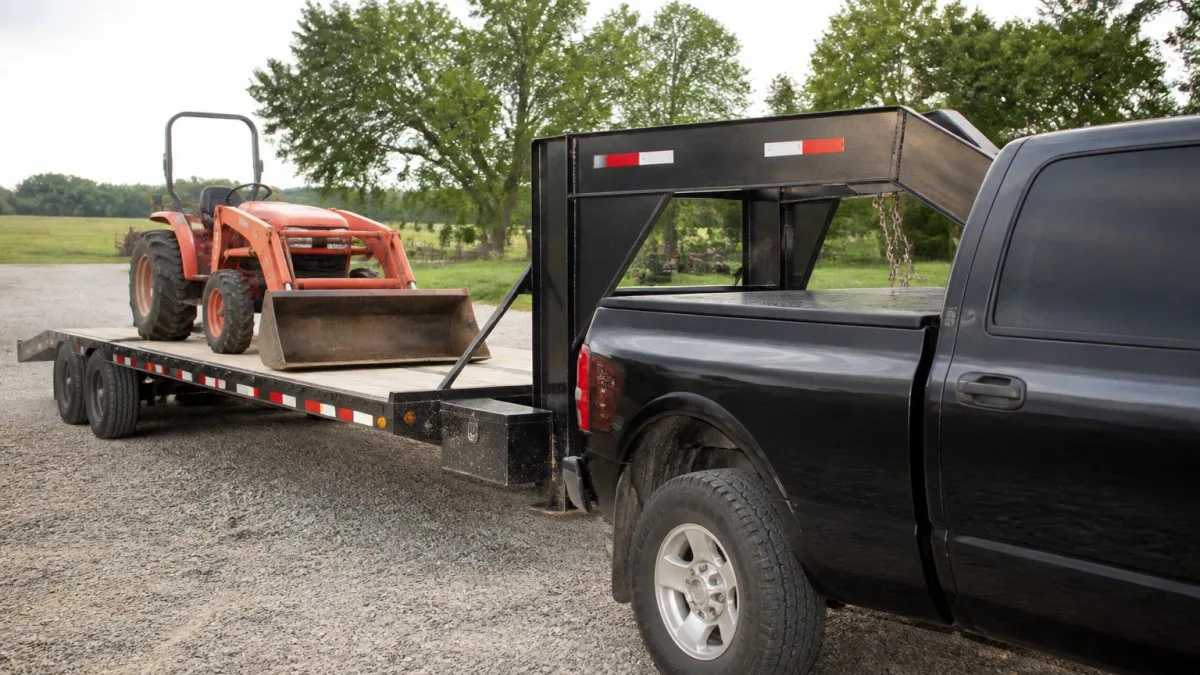
Quick Summary
Durable gooseneck trailers have a heavy-gauge steel frame with closely spaced crossmembers, axles and tires matched to the GVWR, and a payload calculated after subtracting empty weight. Check the frame as closely as the deck, and confirm your tow vehicle can carry the pin weight of the loaded trailer.
- A thick deck on a weak frame will still sag and crack, so check the frame rails and crossmembers.
- Usable payload is GVWR minus empty trailer weight, including options like ramps and winches.
- Leave roughly 10 to 15 percent of payload unused so you are not running at the limit.
- Pin weight typically runs 15 to 25 percent of loaded trailer weight and counts against the truck's payload.
- Secure the machine with at least four tie-down points and recheck chains after the first few miles.
Table of Contents
- How Heavy-Duty Gooseneck Trailers Are Built
- Gooseneck Trailer Weight Capacity: GVWR, Payload and Tongue Weight
- Gooseneck Trailer Types for Heavy Hauling
- Side-by-Side Comparison of Leading Gooseneck Models
- Choosing a Gooseneck Trailer for Construction Equipment
- Gooseneck Trailer Inspection Checklist and Maintenance Schedule
- Booking Your Heavy-Duty Gooseneck With True North
- Frequently Asked Questions
How Heavy-Duty Gooseneck Trailers Are Built
Last Updated: November 2, 2026
Choosing durable gooseneck trailers for heavy hauling starts with understanding how they are put together. The trailer that lasts is generally the one whose frame, axles and tires were matched to the load from the start.
Gooseneck trailers differ from bumper-pull models because the hitch sits over the rear axle of the tow vehicle. Understanding the parts that bear that load is the first step in comparing options.
Steel Frame Construction and Durability
The frame carries every pound of cargo, so it matters most. Look for a heavy-gauge steel main frame with cross members spaced to support the deck without flexing.
A common mistake is judging durability by deck thickness alone. A thick deck on a weak frame will still sag and crack. Check the frame rails and crossmembers as closely as the deck itself.
Axles, Tires, and Suspension
Axle rating and tire load range should match the trailer's GVWR. Tandem axles spread the load and improve braking and tracking on rough roads. Confirm the suspension type, whether leaf springs or torsion axles, and check that the tire load range can carry the rated weight with margin. For a deeper construction-focused look at which models suit the job, see construction-focused buyer's guide.
Gooseneck Trailer Weight Capacity: GVWR, Payload and Tongue Weight
Gross vehicle weight rating (GVWR) is the maximum loaded weight the manufacturer rates the trailer to carry, including the trailer itself. Payload is what remains after you subtract the empty trailer weight from GVWR. A trailer rated at 14,000 pounds GVWR with a 4,000-pound empty weight has about 10,000 pounds of payload. That math sounds simple, but most buyers stop there and never check whether their truck can actually carry the pin weight the loaded trailer puts on it.
Calculate Usable Payload, Not Just GVWR
Work the numbers in this order before you shop:
- Cargo weight. Weigh the machine or load you plan to haul, including attachments, fuel and anything you stack on the deck. Use a certified scale rather than the brochure weight.
- Trailer empty weight. Get the actual empty weight from the manufacturer's spec sheet or a scale ticket. Options such as ramps, winches, spare tires and toolboxes add weight and reduce payload.
- Usable payload. Subtract empty weight from GVWR. If a 14,000-pound GVWR trailer weighs 4,600 pounds empty with options, usable payload is 9,400 pounds, not 10,000.
- Safety margin. Leave roughly 10 to 15 percent of payload unused so you are not running at the limit on every trip. A load that fits with margin handles better and puts less stress on axles, tires and brakes.
Match Pin Weight to Your Tow Vehicle
On a gooseneck, the pin weight, the downward force the trailer's neck places on the hitch, typically runs around 15 to 25 percent of the loaded trailer weight. A 20,000-pound loaded trailer can put 3,000 to 5,000 pounds on the truck. That weight counts against the tow vehicle's payload rating, the same rating that covers passengers, fuel and tools in the cab and bed.
Check these ratings on the driver's door jamb sticker and in the owner's manual:
- GVWR of the tow vehicle, the most the truck itself can weigh loaded.
- GAWR for the rear axle, the most the rear axle can carry, which is where pin weight lands.
- Payload rating, the cargo and passenger capacity, which pin weight eats into.
A trailer rated at 40,000 pounds GVWR does not mean every truck can pull it. The tow vehicle's rear axle rating and payload often become the limiting factor long before the trailer's GVWR does. Confirm both sides of the combination before you buy.
Tongue Weight Versus Pin Weight
Buyers often confuse bumper-pull tongue weight with gooseneck pin weight. A bumper-pull trailer typically carries 10 to 15 percent of its loaded weight on the ball, while a gooseneck carries a higher percentage over the rear axle. The gooseneck's placement improves stability and sway resistance, but it also concentrates more weight on the truck's rear axle and hitch. That is why a truck that pulls a 14,000-pound bumper-pull trailer comfortably may still be overloaded by a similarly rated gooseneck once pin weight is counted.
A Quick Compatibility Check
Before committing to a trailer, run this check with the actual numbers:
- Loaded trailer weight (cargo plus empty trailer) is at or below the trailer's GVWR.
- Pin weight (15 to 25 percent of loaded trailer weight) plus passengers, fuel and bed cargo is at or below the truck's payload rating.
- Pin weight is at or below the rear axle's GAWR margin.
If any line fails, either lighten the load, choose a lighter trailer, or move up to a truck with higher ratings. Getting this right before the sale is far cheaper than discovering it loaded on the shoulder of a highway.
Gooseneck Trailer Types for Heavy Hauling
Gooseneck trailers come in several configurations, and the right one depends on what you haul.
- Flatbed: Open deck, suited to construction materials, pallets and irregular loads.
- Equipment trailer: Often with a low deck, ramps and a straight or dovetail section for skid steers, mini excavators and tractors.
- Car hauler: Typically around 20 to 24 feet, with a deck built for vehicles and light equipment.
- Deck-over: Dual-level design that gives more deck length while keeping a lower loading height.
Side-by-Side Comparison of Leading Gooseneck Models
Specifications vary by manufacturer and configuration, so compare the same fields for each model. The table below summarizes what the supplied research confirms.
| Model | Configuration | Length / GVWR | Starting Price | Best For |
|---|---|---|---|---|
| Diamond C Dual-Wheel | Dual-wheel gooseneck | 16 to 44 ft; GVWR up to 40,000 lb | Contact for pricing | Long, high-GVWR hauling |
| Load Trail GC024 | Gooseneck car hauler | 24 ft; 14,000 lb GVWR | $10,998 | Vehicles and light equipment |
| Big Tex Flatbed/Deck-Over | Flatbed or deck-over | Model-specific | Contact for pricing | Heavy or oversized equipment |
| Kaufman Gooseneck | Flatbed, equipment, car hauler, landscape, tilt | Model-specific | Contact for pricing (factory-direct) | Comparing styles from one maker |
Pricing depends on configuration, options and delivery. Visit True North Trailers and Equipment's website or contact our team for current prices or a quote.
Choosing a Gooseneck Trailer for Construction Equipment
Start with the heaviest machine you expect to haul, then add the trailer's own weight and a safety margin. Check that the deck length accommodates the machine plus space for chains and ramps, and that the deck height allows safe loading.
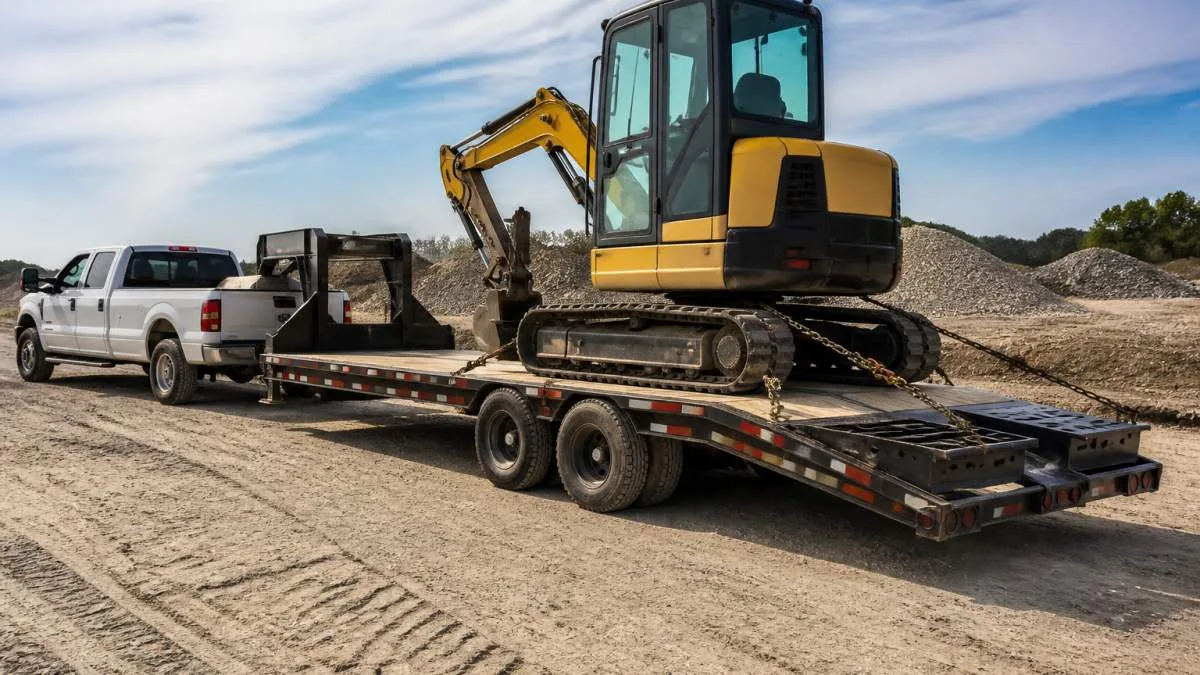
!A flatbed gooseneck trailer loaded with a compact excavator, chained down at a job site with a pickup truck hitched to it
Match the Trailer to the Load
Machinery (skid steers, mini excavators, tractors). These loads concentrate weight on tracks or tires and often sit high.
Vehicles and light equipment. A car hauler configuration around 20 to 24 feet works for most pickups, SUVs and small equipment.
Building materials and pallets. A flatbed with a straight deck is the most versatile choice.
Agricultural loads. Hay, feed, fencing and small implements tend to be bulky rather than extremely heavy, but they still need secure tie-downs.
Loading and Tie-Down Mechanics
How you load and secure the machine matters as much as the trailer's rating:
- Center the load. Keep the heaviest part of the machine over or slightly ahead of the axles so pin weight stays in the recommended range. Too far forward overloads the truck; too far back causes sway.
- Use the right tie-downs. Grade 70 transport chain with binders is common for heavy machinery. Use at least four tie-down points, two at the front and two at the rear, angled to prevent forward, backward and side-to-side movement.
- Attach to the machine, not the deck. Secure chains to the machine's designated tie-down points or frame, not to sheet metal or components that can bend.
- Check the angles. Tie-downs should pull at roughly 45-degree angles where possible. Flat, straight pulls allow the load to shift.
Photograph your loaded and secured trailer before each trip. If a load shifts or a tie-down fails, the photo shows how it was set up and helps with insurance or warranty claims.
Deck Height, Ramps and Loading Safety
Lower deck heights make loading safer, especially for machines with limited ground clearance. Measure the deck height and the ramp angle before you buy, and confirm the ramps are long enough that the machine's belly or attachments clear the breakover point.
If you also haul materials, a flatbed with a straight deck may be more versatile than a specialized equipment trailer. If machinery is your primary load, prioritize deck strength, tie-down placement and ramp rating over cosmetic features.
Gooseneck Trailer Inspection Checklist and Maintenance Schedule
Regular inspection catches small problems before they strand you on a job.
- Tire condition, tread depth and date codes; check pressure before each trip
- Lug nut torque and wheel bearings
- Brake function and electric brake connections
- Safety chains, breakaway cable and hitch pin
Check tires and brakes before every haul, inspect the frame and deck monthly during active use, and schedule a full service with bearing repacking and brake adjustment at least once a year or every 12,000 miles. Keep a log of service dates; it helps with resale and warranty claims.
Booking Your Heavy-Duty Gooseneck With True North
Choosing a durable gooseneck is easier when you compare frame, axles, GVWR and tongue weight side by side. At True North Trailers and Equipment in Pollock, LA, we carry gooseneck, dump, car hauler and utility trailers, so you can compare configurations in one place. Shop gooseneck trailers for sale in Louisiana to see current inventory, and explore flexible financing options to plan your purchase. For specific dimensions or availability, contact our team.
Frequently Asked Questions
What should I look for in a durable gooseneck trailer for heavy hauling?
Start with the GVWR, the frame construction and the axle rating. Check that the GVWR covers your heaviest load plus the trailer's own weight, and that the axles are rated to carry it. A heavy-gauge steel frame, a straight deck long enough for your equipment and a powder-coated or galvanized finish all extend service life. Look at sealed wiring and tie-down points as well, since they affect safety and day-to-day use. Compare these specs across models before comparing price.
How do I choose the right gooseneck trailer weight capacity for my equipment?
Add the weight of your heaviest equipment to the empty weight of the trailer, then choose a GVWR with margin above that total. Payload is GVWR minus the trailer's empty weight, so a trailer with a higher empty weight leaves less room for cargo. Also confirm that the tongue weight, usually about 15 to 25 percent of the loaded weight on a gooseneck, fits your truck's rated hitch capacity. Staying below the rating on every axle keeps braking and handling predictable.
How can I check whether my truck can tow a loaded gooseneck trailer?
Compare the truck's maximum towing rating and payload rating against the trailer's loaded GVWR and expected tongue weight. Check the truck's door-jamb sticker for its payload limit, since the tongue weight counts against it. Use a 5/16-inch or heavier gooseneck ball with a matching hitch rated for the load. If the combined weight is close to the truck's limits, a heavier-duty tow vehicle is the safer choice.
What maintenance helps a gooseneck trailer last longer?
Grease the wheel bearings and check them for play at regular intervals, and inspect the tires for wear and proper inflation before every haul. Keep the frame and deck clear of standing water and road salt, touch up chips in the paint or coating promptly, and lubricate the coupler and jack. Confirm the brake and lighting connections work before each trip. Keeping a written log of service dates makes it easier to spot problems early.
Choose a trailer whose GVWR, deck and axles match your heaviest load, and confirm the tow vehicle can handle the tongue weight. Our team at True North Trailers and Equipment can walk you through specs and availability for your crew.
