

Last Updated: October 23, 2026
Quick Summary
When you buy commercial grade mower and trailer, match trailer capacity to exceed mower weight by at least 20 percent, select deck size based on your typical lot dimensions, and pair equipment with a local dealer for parts and service support. A properly matched package saves money on transport, reduces maintenance issues, and ensures your mower arrives ready to work.
- Trailer capacity must exceed mower weight by at least 20 percent to prevent equipment strain and damage.
- Most contractors underestimate workload by 30 percent, so add 20 percent to your initial estimate when selecting deck size and trailer capacity.
- Commercial mowers are engineered for 1,000+ annual operating hours and last 5-7 years with regular maintenance.
- Trailers typically last 10-15 years with basic maintenance, often outlasting multiple mower replacements.
- A local dealer relationship is worth more than a 5 percent price difference when your mower breaks down during peak season.
Table of Contents
- Commercial Grade Mower and Trailer Package Options
- Zero-Turn and Riding Mower Models for Commercial Use
- Walk-Behind and Stand-On Mower Options
- Mower Trailer Size Guide and Matching Specifications
- Commercial Mower Buying Checklist and Deck Size Considerations
- Lawn Care Equipment Financing and Total Cost of Ownership
- New Equipment Availability and In-Stock Inventory
- Commercial-Duty Specifications and Service Life Expectations
- Frequently Asked Questions
Commercial Grade Mower and Trailer Package Options
When you're ready to buy commercial grade mower and trailer equipment, the decision goes beyond picking two separate machines. A properly matched package saves money on transport, reduces maintenance headaches, and ensures your mower arrives ready to work. At True North Trailers and Equipment, we help contractors and landscapers assemble complete setups that handle demanding schedules without breaking down mid-season.
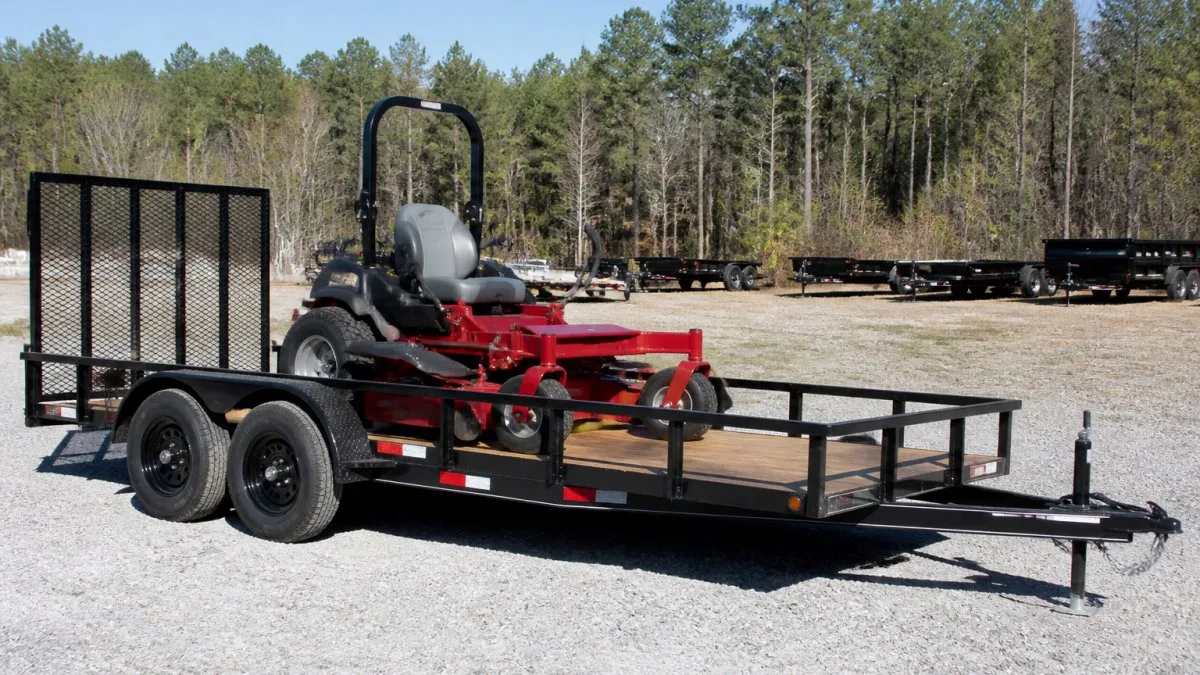
The right commercial mower and trailer combination depends on your crew size, property types, and hauling distance. A zero-turn mower paired with an open utility trailer works for most small landscaping operations. Larger crews cutting multiple properties daily benefit from ride-on mowers matched to enclosed trailers that protect equipment from weather and theft.
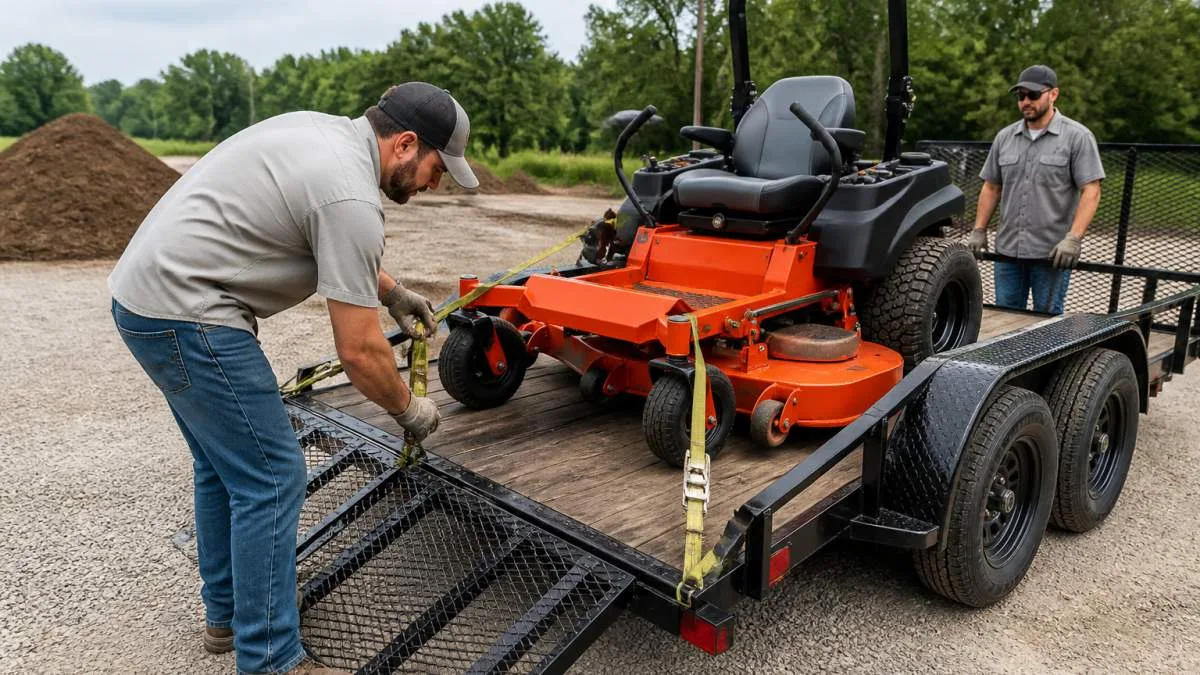
Here's what separates a functional package from one that actually pays for itself: trailer capacity must exceed mower weight by at least 20 percent, deck size should match your typical lot dimensions, and financing terms should align with your cash flow cycle.
Most contractors underestimate their actual mowing workload by 30 percent. When selecting deck size and trailer capacity, add 20 percent to your initial estimate. This buffer prevents equipment strain and extends service life by years.
Zero-Turn and Riding Mower Models for Commercial Use
Zero-turn mowers dominate commercial landscaping because they cut mowing time roughly in half compared to walk-behind alternatives. The zero-turn radius lets you pivot around obstacles without backing up, which matters when you're cutting 15 properties per week. Commercial-grade models handle thick grass, wet conditions, and continuous operation that would wear out residential mowers in a season.
Bad Boy Commercial Zero-Turn Mowers
These machines suit landscaping teams cutting 8 to 12 properties daily. Deck sizes range from 48 to 60 inches, so you can match your mower to typical lot sizes. The key advantage: Bad Boy focuses on durability over features, which means fewer breakdowns during peak season.
Exmark Professional-Grade Riding Mowers
Financing options are available, with examples showing monthly payment structures that let you spread the cost over multiple seasons. The real value of Exmark equipment emerges after 500+ hours of operation, when durability differences between commercial and consumer models become obvious.
Toro Commercial Equipment Lineup
When you contact an authorized dealer, you get access to parts, pricing, attachments, and accessories tailored to your operation. Toro's approach means you're not just buying a mower, you're gaining a relationship with someone who stocks the parts you'll need in six months.
Buying commercial mowers online without dealer support creates a real problem: when your mower breaks down during peak season, you're waiting for parts to ship instead of cutting grass and earning revenue. A local dealer relationship is worth more than a 5 percent price difference.
Walk-Behind and Stand-On Mower Options
Not every job needs a riding mower. Walk-behind and stand-on models excel in tight spaces, residential neighborhoods where noise matters, and properties with slopes that make riding mowers unsafe. Commercial walk-behind mowers are built tougher than residential versions, with reinforced decks and commercial-grade engines that handle 40+ hours per week.
A commercial-grade 21-inch walk-behind mower handles small residential lots and detail work around obstacles. These mowers are lighter than riding models, which means they load onto trailers easily and fit in tight spaces where riders can't reach.
The trade-off is operator fatigue. Walk-behind and stand-on mowers require active engagement, which limits daily cutting time to 6-8 hours before operator exhaustion affects quality. Riding mowers let you work longer with less physical strain, which matters when you're running a crew on multiple properties.
Mower Trailer Size Guide and Matching Specifications
Matching your trailer to your mower is where most buyers make expensive mistakes. Learn detailed guidance on selecting the right trailer to match your mower choice. An undersized trailer forces you to overload, which damages both the trailer and mower suspension.
| Mower Type | Typical Weight | Minimum Trailer Capacity | Recommended Deck Size | Trailer Length |
|---|---|---|---|---|
| Walk-behind | 300-400 lbs | 1,000 lbs | 21-22 inches | 4-5 feet |
| Stand-on | 600-800 lbs | 2,000 lbs | 32-36 inches | 5-6 feet |
| Zero-turn (small) | 1,200-1,500 lbs | 3,500 lbs | 48 inches | 6-7 feet |
| Zero-turn (large) | 1,800-2,200 lbs | 5,000 lbs | 60+ inches | 7-8 feet |
| Riding (commercial) | 2,000-2,500 lbs | 5,500 lbs | 54-60 inches | 8-10 feet |
The weight column shows what your mower actually weighs. Add fuel, operator, and basic tools, then multiply by 1.25 to get your working weight. Your trailer capacity must exceed this number.
Trailer length matters for stability. A mower that's too far back on the trailer creates tongue weight imbalance, which makes towing dangerous and burns extra fuel. Most commercial mowers sit best on trailers that are 2 to 3 feet longer than the mower itself.
Check your vehicle's towing capacity before buying a trailer-mower package. A 5,000-pound trailer plus a 2,000-pound mower plus fuel and tools easily reaches 7,500 pounds. Many pickup trucks max out at 10,000 pounds, which leaves no margin for error. Contact your truck manufacturer if you're unsure.
NHTSA towing safety guidelines recommend checking your vehicle's owner manual for exact towing limits, not relying on estimates. Exceeding capacity voids warranties and creates liability if something goes wrong.
Commercial Mower Buying Checklist and Deck Size Considerations
Before you commit to any mower-and-trailer package, work through this checklist to ensure you're buying equipment that matches your actual workload.
- Count your typical weekly mowing jobs and estimate total cutting hours
- Measure the largest property you regularly service and the smallest
- Note terrain types: flat residential lawns, slopes, rough commercial properties, or mixed
- Check your vehicle's towing capacity and confirm it exceeds your trailer-plus-mower weight
- Verify that your crew can physically load and unload the mower safely
- Confirm trailer storage space at your facility or home
- Research local regulations on trailer lighting, brake requirements, and registration
- Calculate fuel costs for your expected mowing schedule
- Identify a dealer within 30 minutes of your operation for service and parts
Deck size is the most visible choice, but it's often the wrong starting point. A 60-inch deck cuts faster than a 48-inch, but it's harder to maneuver in residential neighborhoods and won't fit through some gate widths. Most landscaping crews use 48-inch or 54-inch decks because they balance speed and maneuverability.
The real question: what's your average lot width? If you're cutting mostly properties under 40 feet wide, a 48-inch deck makes two passes per width. A 60-inch deck makes one pass, which saves time but creates a larger turning radius in tight spaces. Properties over 50 feet wide favor the 60-inch deck because the time savings justify the handling trade-off.
Lawn Care Equipment Financing and Total Cost of Ownership
Buying commercial mower and trailer equipment upfront strains cash flow for most small operations. Financing spreads the cost across the months you're actually earning revenue from that equipment, which is how most successful landscaping businesses approach it.
When you evaluate financing, look beyond the monthly payment. Explore financing options and strategies for purchasing commercial mower packages. Total cost of ownership includes fuel, maintenance, repairs, insurance, and eventual replacement.
Many operators finance mower equipment separately from trailers, which lets you upgrade mowers every 3-4 years while keeping the trailer longer. Trailers typically last 10-15 years with basic maintenance, while mowers face harder use and need replacement sooner.
IRS guidance on equipment depreciation allows you to deduct equipment purchases as business expenses, which reduces your tax burden. Consult your accountant about whether to depreciate over time or claim immediate deductions, as this affects your financing strategy.
A mower that costs 20 percent more upfront but runs 1,000 additional hours before major repair saves you money when you factor in downtime, repair costs, and lost revenue. Calculate total cost per operating hour, not just purchase price.
New Equipment Availability and In-Stock Inventory
Availability matters more than most buyers realize. A mower on backorder delays your season start, which means lost revenue during peak cutting months.
At True North Trailers and Equipment, we maintain mowers for sale in Louisiana area with inventory in stock, so you can see equipment in person.
When you're shopping for new equipment, ask the dealer directly: "Can I take this home today, or is it on order?" Dealers with in-stock inventory can answer immediately. Dealers without stock will quote lead times that push your season start back weeks.
Consumer Reports equipment reliability ratings track which brands hold up best over time, which helps you compare models beyond just price and features.
Commercial-Duty Specifications and Service Life Expectations
Commercial equipment is built for continuous operation, which means thicker steel, heavier components, and engines rated for longer duty cycles. A residential mower might handle 100 hours per season.
Engine horsepower tells part of the story. Commercial mowers typically run 18-30 horsepower engines, while residential models max out around 15 horsepower.
Transmission type matters for durability. Hydrostatic transmissions (fluid-based) are smoother and more reliable than belt-drive systems, which wear out faster under heavy use.
Service life for commercial mowers runs 5-7 years with regular maintenance, assuming 1,000+ annual operating hours. That translates to roughly 5,000-7,000 total hours before major overhaul or replacement becomes economical. A well-maintained commercial mower earning revenue for 2,000 hours annually pays for itself in three seasons.
Trailers last significantly longer. A utility trailer with basic maintenance, checking tire pressure, lubricating bearings, inspecting welds, can operate for 10-15 years.
American Society of Agricultural and Biological Engineers standards set durability benchmarks for commercial equipment, which you can reference when comparing models.
When you're ready to buy commercial grade mower and trailer equipment, the decision combines equipment selection, financing strategy, and dealer support. True North Trailers and Equipment offers financing options that spread costs across your earning season, maintains in-stock inventory so you start work immediately, and provides the local dealer support that matters when something goes wrong. Contact our team to discuss your specific needs and see available equipment in person.
Frequently Asked Questions
What should I look for when buying a commercial grade mower and trailer?
Focus on deck size, engine horsepower, and cutting performance for demanding schedules. For trailers, verify weight capacity exceeds your mower's weight by at least 20%, check deck dimensions for secure loading, and confirm the trailer has reinforced construction for daily commercial use. Inspect hitch compatibility, tire ratings, and brake systems. A commercial-grade mower typically delivers 15+ horsepower with commercial-condition components designed for 40+ hours weekly operation.
What size trailer do I need to haul a commercial mower?
Match your trailer capacity to the mower's weight plus 25% safety margin. A typical riding mower weighs 800-1,500 pounds; a zero-turn mower ranges from 1,200-2,000 pounds. Choose a utility or enclosed trailer rated for at least 3,000-5,000 pounds gross vehicle weight rating (GVWR). Deck length should accommodate your mower's wheelbase with 2-3 feet clearance; width should allow side-to-side movement for loading and unloading.
Can I finance a commercial mower and trailer together?
Yes. Many dealers offer flexible financing options for bundled equipment purchases. True North Trailers and Equipment provides flexible financing options designed for small business owners and contractors. Contact your dealer for current rates, down payment requirements, and whether monthly payments apply to combined purchases or individual items.
Is it cheaper to buy a mower and trailer as a package?
Package deals often provide better overall value through bundled pricing, though total cost depends on equipment selection and financing terms. Buying together simplifies financing approval and may reduce delivery fees. However, compare the package price against individual item pricing before committing. Factor in your crew size, mowing workload, and expected service life when evaluating total cost of ownership, not just upfront price.
